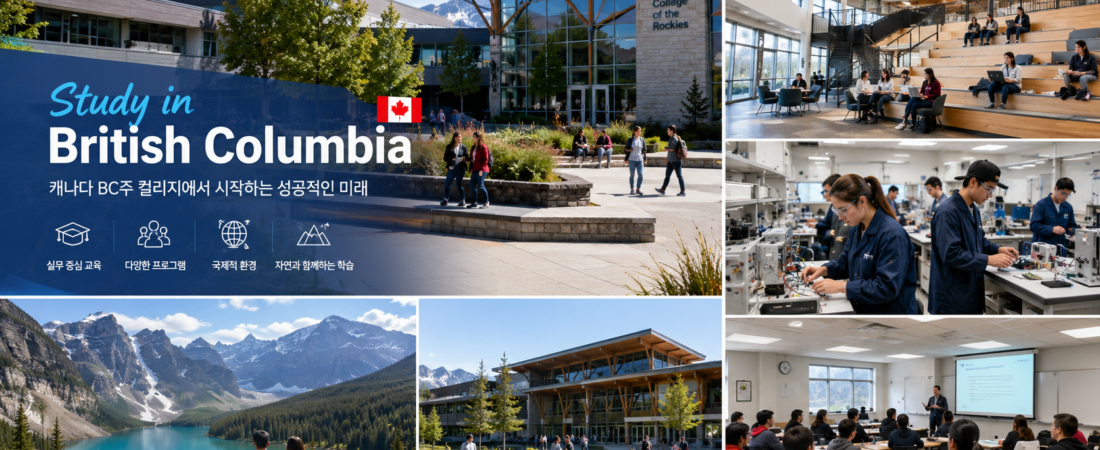
British Columbia is one of the most popular places to study in Canada. While universities such as UBC and SFU receive a lot of attention, public colleges can be an excellent choice for students who want practical education, smaller classes, university-transfer opportunities, and career-focused training.
After living in British Columbia, I have realized that choosing a college here is not simply about finding the most famous school. Location, transportation, housing costs, program structure, work experience and future career opportunities can be just as important as the name of the institution.
For international students in particular, understanding these differences before applying can save both time and money.
Here are some of the major public colleges and institutes in British Columbia worth considering.
1. Douglas College – New Westminster and Coquitlam
Douglas College is one of the best-known public colleges in Metro Vancouver. Its two main campuses are located in New Westminster and Coquitlam, both of which are accessible by public transit.
Douglas serves nearly 25,000 students annually and offers degree programs, career programs and hundreds of courses that can transfer to universities.
Popular areas include:
- Business and Accounting
- Computing Studies
- Health Sciences
- Psychology
- Criminology
- Early Childhood Education
- Social and Community Studies
- University Transfer
One advantage I notice from living in the Metro Vancouver area is transportation. For students who do not own a car, being able to commute by SkyTrain can make everyday life considerably easier.
Douglas also operates Career Services and offers opportunities such as Co-operative Education and Business Internships, along with career advising, job boards and employer networking events.
For students who want access to Vancouver-area employment opportunities without studying directly in downtown Vancouver, Douglas is worth considering.
2. Langara College – Vancouver
Langara College is located on West 49th Avenue in Vancouver and serves more than 16,000 students annually. It is especially well known as a pathway college for students who may eventually want to transfer to a university.
Major study areas include:
- Business
- Computer Science
- Arts and Humanities
- Science and Engineering
- Health
- Social Sciences
- Creative Arts
Langara offers more than 150 programs across regular and continuing studies. Many programs also provide experiential learning opportunities such as Co-op, practicums, internships and work placements.
For me, Langara’s location is one of its biggest advantages. Vancouver offers access to a large and diverse job market, but students should also remember that housing and everyday living expenses can be high.
Langara may therefore suit students who value university transfer, urban life and access to Metro Vancouver employers.
3. British Columbia Institute of Technology (BCIT) – Burnaby and Metro Vancouver
BCIT is different from a traditional liberal arts college. It is strongly focused on applied, technical and career-oriented education.
BCIT operates several campuses, with its main campus in Burnaby.
Some notable fields include:
- Computer Systems and Information Technology
- Engineering
- Construction and Trades
- Business
- Aerospace
- Health Sciences
- Digital Technology
BCIT reports approximately 45,000 students across its programs and emphasizes hands-on education designed around workplace skills. Its official admissions information reports a very high employment rate among surveyed degree graduates.
This is why I would personally look closely at BCIT if my main goal were to acquire a specific technical skill and enter the workforce rather than follow a traditional university route.
The workload can be demanding, but that career-focused environment is also part of BCIT’s appeal.
4. Vancouver Community College (VCC) – Vancouver
Vancouver Community College has campuses in Downtown Vancouver and on East Broadway.
VCC is particularly attractive to students looking for practical, hands-on training.
Its program areas include:
- Culinary Arts and Baking
- Hospitality
- Business
- Health Sciences
- Early Childhood Education
- Automotive and Transportation Trades
- Electrical and Technology Programs
- Design
- Music
- University Transfer
VCC offers programs ranging from certificates and diplomas to apprenticeship training and selected bachelor’s degrees.
One thing I like about this type of college is that the connection between studying and working can be very clear. A student studying culinary arts, automotive technology or health care, for example, can develop skills directly connected to a specific occupation.
For students whose priority is practical training rather than a traditional academic experience, VCC deserves serious consideration.
5. Camosun College – Victoria
Camosun College is located in Victoria, the capital of British Columbia, on Vancouver Island.
The school offers programs in areas such as:
- Business
- Engineering Technology
- Health and Human Services
- Arts and Science
- Sport and Exercise Education
- Trades and Apprenticeship
Victoria provides a different lifestyle from Metro Vancouver. It has government, tourism, health-care and technology-related employment while maintaining a smaller-city atmosphere.
For students who prefer Vancouver Island and want to avoid the pace of Metro Vancouver, Camosun can be an appealing option.
6. Okanagan College – Kelowna and the Okanagan Region
Okanagan College serves communities in British Columbia’s Okanagan Valley, including Kelowna and surrounding areas.
Popular areas of study include:
- Business
- Computer and Information Systems
- Health and Social Development
- Trades
- Engineering Technology
- Culinary and Tourism-related Studies
I have visited the Okanagan region, and one thing that immediately stands out is how different it feels from Vancouver. Kelowna combines a growing city with lakes, mountains, tourism, agriculture and an expanding business community.
For students interested in tourism, hospitality, trades or careers connected to a growing regional economy, studying in the Okanagan can provide a very different Canadian experience.
7. College of New Caledonia – Prince George and Northern BC
The College of New Caledonia, commonly known as CNC, serves Prince George and several communities across northern British Columbia.
Its study areas include:
- Business and Management
- Health Sciences
- Human Services
- Technologies
- Trades and Industry
- University Studies
Northern BC can be particularly interesting for students considering careers connected to health care, skilled trades, natural resources and community services.
The lifestyle is very different from Vancouver, so students should consider climate, transportation and employment opportunities when deciding whether northern BC is right for them.
8. Selkirk College – Castlegar and the Kootenay Region
Selkirk College is a public community college serving communities in BC’s Interior, including Castlegar and the surrounding Kootenay region.
Programs include:
- Business
- Hospitality and Tourism
- Environment and Geomatics
- Digital Arts
- University Arts and Sciences
- Trades
- Culinary Programs
A particularly useful feature is work-integrated learning. Selkirk offers opportunities including Co-op education, internships, apprenticeships and work terms in selected programs.
For students who enjoy outdoor activities and smaller communities, Selkirk offers an experience that is quite different from studying in Vancouver.
9. North Island College – Vancouver Island
North Island College serves communities across Vancouver Island, particularly central and northern areas.
Its programs include university studies, business, health care, trades, technology, tourism and community-focused education.
This can be a good option for students who prefer smaller communities and a quieter environment.
However, I would always compare transportation, housing and part-time employment opportunities before choosing a smaller city. A lower-cost location is not automatically better if commuting or finding suitable work becomes difficult.
Which BC College Should You Choose?
There is no single “best college” for every student.
If I were helping someone choose, I would first ask four questions:
What career do you want? Where can you realistically afford to live? Does the program include practical work experience? And do you want to transfer to university later?
For university transfer, Langara and Douglas are strong schools to investigate.
For technology, engineering and highly career-focused applied education, BCIT stands out.
For hands-on vocational and skilled training, VCC can be attractive.
Students who want life outside Metro Vancouver can also investigate Camosun, Okanagan College, CNC, Selkirk College and North Island College.
College and Employment in British Columbia
A Canadian college diploma does not automatically guarantee a job.
What can make a significant difference is choosing a program that combines education with Co-op, internships, practicums, apprenticeships or other work-integrated learning opportunities.
These experiences can help students build Canadian workplace experience, professional references and industry connections before graduation.
International students should also be careful not to assume that every program automatically qualifies them for a Post-Graduation Work Permit (PGWP). Immigration rules and eligible programs can change, so applicants should always verify the latest requirements with the Government of Canada before paying tuition.
Final Thoughts
Living in British Columbia has taught me that location matters much more than I originally expected.
Vancouver offers excellent transportation and a large employment market, but living costs can be challenging. Coquitlam and New Westminster provide convenient access to Metro Vancouver while offering a different residential environment. Victoria offers the Vancouver Island lifestyle, while Kelowna and smaller Interior communities provide another side of Canadian life entirely.
That is why I would not choose a college based only on rankings or reputation.
The best college is the one that connects your education, budget, location and long-term career plan.
Before applying, compare the actual curriculum, tuition, housing costs, transportation, Co-op opportunities and career outcomes of your chosen program.
A college is not simply a place to study for two years. For many students, it becomes the starting point for their career and life in Canada.