Canada is one of those countries that is difficult to understand from a map alone.
You can look at the enormous distance between Vancouver and Toronto, see photographs of turquoise lakes in Alberta, or read about the historic streets of Québec City, but none of those things fully explain how different one part of Canada can feel from another.
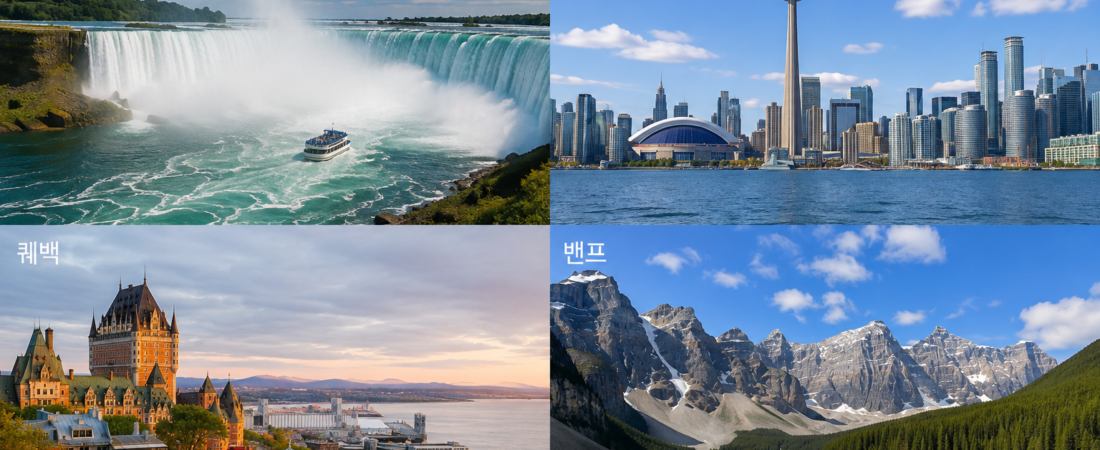
A trip to Canada can mean waking up beside the Rocky Mountains, walking through a modern city by the Pacific Ocean, standing beside one of the world’s most famous waterfalls, exploring a French-speaking historic district, or watching the northern lights far from a major city.
That variety is also what can make planning a first trip to Canada confusing.
Where should you go first?
The answer depends on what kind of traveller you are.
Someone who loves mountains and hiking may choose Alberta, while a traveller interested in restaurants, museums and city life may prefer Toronto or Montréal. Families may want an itinerary that combines easy sightseeing with nature, while winter travellers may be looking for skiing, snow and the northern lights.
This Canada travel guide introduces 10 of the best places to visit in Canada for a first-time visitor, along with the type of traveller each destination suits, the seasons worth considering, and practical details that can make your trip easier.
1. Vancouver, British Columbia
Best for: Travellers who want both city life and nature
Vancouver is an excellent introduction to Canada because you do not have to choose between a city vacation and an outdoor vacation.
You can spend the morning walking beside the ocean, have lunch downtown, visit a neighbourhood filled with restaurants and shops, and still see mountains in the distance.
Stanley Park is one of the city’s best-known attractions and is a natural starting point for a first visit. The seawall, beaches and forested areas make it possible to experience Vancouver’s outdoor character without travelling far from downtown.
Granville Island offers a very different experience, with its public market, food, shops and waterfront setting.
Travellers can also explore Gastown, Canada Place, English Bay and the city’s many multicultural neighbourhoods.
One of Vancouver’s greatest advantages is its location.
The city can serve as a starting point for trips to Whistler, Vancouver Island, the Sea-to-Sky corridor and other parts of British Columbia.
When should you visit Vancouver?
Summer is a particularly attractive time for outdoor activities, beaches, parks and long daylight hours.
Spring and fall can be excellent for travellers who prefer cooler temperatures.
Winter is generally milder than in many other Canadian cities, although visitors should be prepared for rain.
Before you go
Do not assume that all of British Columbia has Vancouver’s winter climate. Weather can change dramatically when travelling into the mountains or farther inland.
My recommendation for first-time visitors: Give Vancouver at least two or three days rather than treating it only as an arrival airport.
2. Banff National Park, Alberta
Best for: Mountains, hiking, photography and first-time Canadian Rockies visitors
If there is one landscape that many international travellers imagine when they think about Canada, it is probably the Canadian Rockies.
Banff National Park provides exactly that experience.
The combination of enormous mountains, blue-green lakes, forests and wildlife makes the region feel completely different from Canada’s major cities.
The town of Banff is a convenient base, with accommodation, restaurants and access to many nearby attractions.
Popular experiences include Banff Avenue, Bow Falls, viewpoints around the town, hiking trails and scenic drives.
But Banff is not simply a place to stop, take one photograph and leave.
The surrounding national park is the real attraction.
Best time to visit Banff
June through September is popular for hiking and summer sightseeing.
Winter transforms Banff into a destination for skiing, snowboarding and other snow activities.
Fall can bring beautiful scenery and cooler temperatures.
Important travel tip
Banff is extremely popular.
Accommodation, camping and some transportation options can become difficult to secure during peak periods.
Planning ahead is far better than arriving in the Rockies and assuming everything will be available.
And remember: this is a national park and wildlife habitat. Animals should be observed from a safe distance, and visitors should follow current Parks Canada guidance.
3. Lake Louise and Moraine Lake, Alberta
Best for: Iconic Canadian scenery and photography
Lake Louise deserves its own place on this list even though it is located within Banff National Park.
The first time you see the lake surrounded by mountains, it is easy to understand why photographs of Lake Louise appear so frequently in Canadian travel advertising.
The colour of the water, mountain backdrop and surrounding trails make it one of Canada’s most recognizable landscapes.
Nearby Moraine Lake is equally spectacular and, for many travellers, becomes one of the highlights of an entire Canadian vacation.
However, this is one destination where planning transportation before arriving is essential.
An important 2026 travel rule
Personal vehicles are not permitted on Moraine Lake Road.
Visitors generally need to use Parks Canada shuttles, public transit or eligible commercial transportation to access Moraine Lake.
Parks Canada also recommends advance shuttle planning for Lake Louise and Moraine Lake because demand can be extremely high.
Do not build an itinerary around simply driving to Moraine Lake and finding parking when you arrive.
Best time to visit
For the classic unfrozen lake experience, the warmer months are generally the main travel season.
Lake Louise is also beautiful in winter, but it becomes a completely different experience.
Practical lesson: In Canada’s most famous natural destinations, transportation planning can be just as important as choosing the attraction itself.
4. Jasper National Park, Alberta
Best for: Travellers who want a deeper Rocky Mountain experience
Banff may receive more international attention, but Jasper deserves a place on a Canadian Rockies itinerary.
One of the great pleasures of visiting Jasper is actually the journey there.
Travelling between the Lake Louise area and Jasper along the Icefields Parkway provides one of Canada’s most memorable road-trip experiences.
Mountains, glaciers, rivers, forests and viewpoints appear throughout the route.
Jasper itself offers access to lakes, trails and mountain scenery while providing another base for exploring the Rockies.
Who should visit Jasper?
I would especially recommend Jasper to travellers who have enough time to do more than a short Banff trip.
If your Canadian Rockies vacation is only a couple of days long, trying to include everything can make the trip feel rushed.
But if you have more time, combining Banff, Lake Louise and Jasper creates a much more complete Rockies experience.
Travel carefully
Mountain conditions can change.
Road closures, construction, wildfire conditions, weather and attraction access can affect a planned itinerary.
Check current official conditions before beginning a long drive, and avoid treating travel times shown on a map as guaranteed.
In the Rockies, the journey itself is part of the trip.
5. Toronto, Ontario
Best for: Big-city experiences, food, sports and multicultural neighbourhoods
Canada is famous for wilderness, but a first-time visitor should not overlook its cities.
Toronto offers a completely different side of the country.
It is Canada’s largest city and one of its most culturally diverse urban centres.
The CN Tower dominates the skyline and is one of the city’s most recognizable landmarks.
Visitors can also explore the waterfront, St. Lawrence Market, museums, shopping areas and distinctive neighbourhoods.
Sports fans have another reason to visit.
Depending on the season, Toronto offers opportunities to experience major professional sports, including baseball, basketball and hockey.
Food is another major part of the Toronto experience.
Rather than eating only near the major tourist attractions, explore different neighbourhoods and cuisines. Toronto’s diversity is one of the reasons the city rewards travellers who move beyond the obvious landmarks.
Best time to visit Toronto
Late spring through fall is comfortable for exploring the city on foot.
Summer brings events and warm weather but also larger crowds.
Winter can be cold, but museums, restaurants, shopping and indoor attractions mean the city does not shut down when temperatures drop.
6. Niagara Falls, Ontario
Best for: Families, couples and first-time visitors to Ontario
Niagara Falls is one of Canada’s most famous natural attractions.
Photographs give you an idea of its size, but being close enough to hear the water creates a very different experience.
The Canadian side provides famous views of Horseshoe Falls, and there are multiple ways to experience the area beyond simply standing at a viewpoint.
Visitors can explore the Niagara Parkway, see the falls illuminated at night, experience attractions near the water, and combine the trip with other destinations in the Niagara region.
How long should you stay?
Niagara Falls can be visited as part of a day trip, particularly when travelling from Toronto.
However, staying overnight gives you more time to experience the falls without rushing and allows you to see the area after many day visitors have left.
A useful planning idea
Toronto and Niagara Falls work particularly well together.
Instead of treating them as two separate Canadian vacations, first-time visitors can combine urban sightseeing in Toronto with a very different natural experience at Niagara Falls.
That contrast is part of what makes Ontario an appealing first destination in Canada.
7. Québec City, Québec
Best for: History, architecture, walking and French-Canadian culture
Québec City feels different from almost every other major destination on this list.
Old Québec is filled with historic buildings, narrow streets, cafés and architecture that can feel distinctly European while remaining unmistakably Canadian.
The Château Frontenac dominates many of the classic views of the city.
Petit-Champlain, Place Royale, Dufferin Terrace and the historic streets of Old Québec make this a destination best explored slowly and often on foot.
Québec City’s official tourism organization describes Old Québec as compact and easy to explore by walking, which is one reason it works so well for first-time visitors.
When should you visit?
There is no single correct answer.
Summer brings festivals and lively streets.
Fall offers beautiful colours.
Winter can be extremely cold, but snow gives Old Québec a remarkable atmosphere and the city embraces winter rather than hiding from it.
Spring tends to be quieter.
Do I need to speak French?
French is central to the culture and identity of Québec.
Visitors to major tourist areas can generally navigate their trip without being fluent in French, but learning a few basic expressions is both useful and respectful.
Even a simple Bonjour or Merci is worth knowing.
8. Montréal, Québec
Best for: Food, festivals, culture and urban exploration
Montréal offers another side of Québec.
Where Québec City often attracts visitors with its concentrated historic character, Montréal feels larger, more metropolitan and highly diverse.
Old Montréal is a natural starting point for first-time visitors, with historic streets and the Old Port nearby.
But Montréal should not be reduced to its historic district.
Its neighbourhoods, restaurants, markets, cafés, museums, music and festivals are a major part of the experience.
Mount Royal also gives visitors an opportunity to step away from the busy streets and see the city from a different perspective.
Montréal or Québec City?
If possible, visit both.
Choose Québec City if historic atmosphere is your main priority.
Choose Montréal if you want a larger city with food, nightlife, neighbourhood exploration and cultural events.
Combining the two gives visitors a much better introduction to Québec than choosing only one.
9. Prince Edward Island
Best for: Coastal scenery, slower travel and relaxed road trips
Not every Canadian vacation needs to involve major cities or enormous mountains.
Prince Edward Island offers something quieter.
The province is known for coastal scenery, beaches, red cliffs, farmland and small communities.
It is also closely associated with Anne of Green Gables, which has made the island familiar to readers around the world.
PEI works particularly well for travellers who enjoy driving without trying to check off a long list of major attractions every day.
Stop at a beach.
Explore a small town.
Try local seafood.
Take a scenic coastal drive.
Allow the landscape to be the attraction.
Best time to visit
Summer is the obvious choice for beaches and many seasonal activities.
Late spring and early fall can appeal to visitors looking for a quieter trip, but travellers should check seasonal opening hours because some businesses and attractions operate differently outside the main tourism season.
PEI is a good reminder that the best places to visit in Canada are not always the biggest or busiest ones.
10. Yukon
Best for: Northern lights, wilderness and travellers looking for something completely different
For travellers who want to see a side of Canada far removed from Toronto or Vancouver, the Yukon is worth considering.
Whitehorse is the territorial capital and a practical base for beginning a northern trip.
The surrounding region offers wilderness, mountains, rivers and enormous open landscapes.
For many visitors, one of the biggest attractions is the possibility of seeing the aurora borealis, or northern lights.
However, an aurora trip should never be planned with the assumption that the lights are guaranteed.
Cloud cover, solar activity, season and timing all matter.
When should you go?
Your ideal season depends heavily on what you want to experience.
Winter offers snow and long nights.
Warmer months provide dramatically longer daylight and better conditions for many road trips and outdoor activities.
Northern Canada requires more preparation than a typical city break.
Weather, road conditions, distances, fuel availability and appropriate clothing should all be considered before travelling outside populated areas.
For the right traveller, however, the experience can be unforgettable.
How Should a First-Time Visitor Choose?
Ten destinations still leave one difficult question:
Where should I actually go?
The easiest approach is to decide what kind of Canadian experience you want.
For mountains and dramatic scenery
Choose Banff, Lake Louise and Jasper.
These destinations work naturally together and provide the classic Canadian Rockies experience.
For city life and nature
Choose Vancouver.
It is particularly convenient for travellers who want urban experiences without being far from mountains, ocean and outdoor activities.
For a first trip to Eastern Canada
Combine Toronto and Niagara Falls.
The two destinations provide a good balance between a major Canadian city and a famous natural attraction.
For history and culture
Combine Montréal and Québec City.
The journey provides two very different experiences of French-speaking Canada.
For a slower coastal vacation
Consider Prince Edward Island.
For wilderness and northern experiences
Consider Yukon.
There is no single destination that represents all of Canada.
That is precisely why travelling here can be so interesting.
What Is the Best Time to Visit Canada?
This is one of the most common questions about Canada travel, but there is no universal best month.
Canada is enormous.
The weather in Vancouver can be completely different from conditions in Banff, Toronto, Québec City or Whitehorse on the same day.
Summer
Summer is generally the easiest season for a first Canadian road trip.
Hiking, lakes, beaches, camping and sightseeing are widely available, although popular destinations can become crowded and expensive.
Fall
Fall can be wonderful for cooler weather and colourful foliage, particularly in Eastern Canada.
Winter
Winter is not simply a season to avoid.
For skiing, snowboarding, skating, winter festivals and certain northern experiences, it may actually be the reason to visit Canada.
But winter travel requires appropriate clothing and additional attention to weather and road conditions.
Spring
Spring can offer fewer crowds in some destinations, but conditions vary greatly by region and elevation.
A warm spring day in a city does not mean a mountain hiking trail will be snow-free.
City Vacation vs. Nature Vacation in Canada
One mistake first-time travellers sometimes make is trying to fit too much into one trip.
Canada’s size matters.
Vancouver, Banff, Toronto and Québec City may all look like reasonable points on the same map, but travelling between them can involve substantial distances and costs.
Instead of trying to see the entire country in one week, consider choosing one region.
For example:
Western Canada: Vancouver + Canadian Rockies
Ontario: Toronto + Niagara Falls
Québec: Montréal + Québec City
Atlantic Canada: Prince Edward Island + neighbouring Maritime destinations
A focused trip usually gives you more time to enjoy Canada instead of spending much of your vacation in airports or vehicles.
7 Practical Canada Travel Tips for First-Time Visitors
1. Never underestimate distance
Canada is the second-largest country in the world by total area.
Check actual driving and flight times rather than judging distances from a map.
2. Reserve popular destinations early
Accommodation and transportation around famous destinations such as Banff and Lake Louise can fill quickly during peak periods.
3. Check national park requirements
National parks may require passes, reservations or specific transportation arrangements.
Always check current Parks Canada information before travelling.
4. Prepare for changing weather
Layers are extremely useful.
Mountain weather can change quickly even during summer.
5. Do not plan every minute
Canada’s landscapes reward slower travel.
Leave time for viewpoints, short walks and unexpected stops.
6. Respect wildlife
Seeing wildlife can be one of the highlights of a Canadian vacation, but wild animals should never be approached or fed.
Follow official park guidance and maintain appropriate distances.
7. Check conditions shortly before departure
Wildfires, smoke, snow, road closures, construction and severe weather can affect travel plans.
Information you read several months before your vacation may no longer reflect current conditions.
Frequently Asked Questions About Travelling in Canada
What are the best places to visit in Canada for the first time?
Vancouver, Banff National Park, Lake Louise, Toronto, Niagara Falls and Québec City are excellent starting points because they represent very different Canadian experiences. Your best choice depends on whether you prefer nature, cities, history or outdoor activities.
How many days do I need for a Canada vacation?
For one region, approximately one week can provide a useful introduction. Trying to visit both western and eastern Canada in a short trip usually requires flights and considerably more planning.
Is Canada good for a road trip?
Yes. Canada has some extraordinary road-trip routes, particularly in British Columbia, Alberta, Québec and Atlantic Canada. However, distances can be much greater than first-time visitors expect.
Should I visit Vancouver or Toronto?
Choose Vancouver if access to mountains, ocean and outdoor recreation is a priority. Choose Toronto if you prefer a larger urban experience, multicultural food, museums, major sports and easy access to Niagara Falls.
Is Banff worth visiting on a first trip to Canada?
For travellers interested in mountains and nature, absolutely. Banff and the surrounding Canadian Rockies offer some of the country’s most recognizable scenery.
Can I drive to Moraine Lake?
Personal vehicles are not permitted on Moraine Lake Road. Visitors should check current Parks Canada shuttle, transit and approved transportation information when planning their visit.
Is Québec City worth visiting in winter?
Yes, if you are prepared for cold weather. Snow changes the atmosphere of Old Québec dramatically, and winter activities are an important part of the city’s identity.
Final Thoughts: There Is More Than One Canada to Discover
Choosing the best places to visit in Canada is difficult because the country does not offer just one type of vacation.
Vancouver gives you ocean and mountains beside a modern city.
Banff, Lake Louise and Jasper reveal the scale of the Canadian Rockies.
Toronto provides the energy of Canada’s largest city, while Niagara Falls shows the power of its natural landscape.
Montréal and Québec City introduce travellers to a distinctive French-Canadian culture and history.
Prince Edward Island slows the journey down.
And the Yukon reminds visitors just how vast and wild Canada can be.
For a first visit, my strongest advice is simple:
Do not try to see everything.
Choose the part of Canada that interests you most and give yourself enough time to experience it properly.
A memorable Canadian vacation does not need to include ten provinces, five flights and twenty attractions.
Sometimes it is better to spend an extra morning beside a mountain lake, walk through a neighbourhood you had not planned to visit, or stop along a scenic highway simply because the view is too beautiful to pass by.
Canada rewards travellers who leave a little room for the journey itself.
Travel conditions, transportation rules, park access and reservation requirements can change. Always check official provincial, municipal and Parks Canada information before travelling.