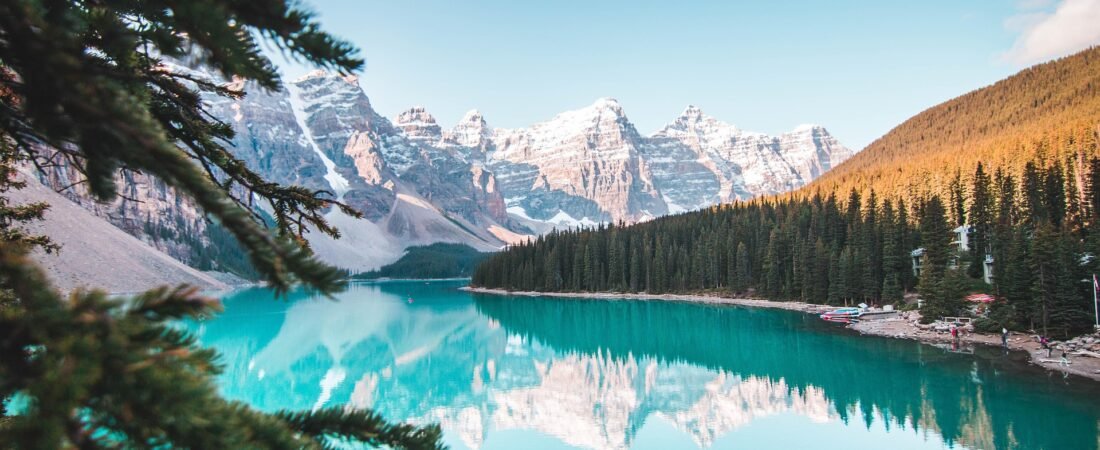
Banff is one of Canada’s most famous travel destinations and one of the best places to experience the Canadian Rockies.
Located in Alberta, Banff National Park is known for turquoise glacial lakes, dramatic mountain scenery, wildlife, hiking trails, cycling routes, hot springs, and the lively mountain town of Banff.
For first-time visitors, however, planning a trip to Banff can be more complicated than simply choosing a hotel and driving to the mountains.
Where should you stay? Do you need a car? How do you visit Lake Louise and Moraine Lake? What animals might you encounter? Is it safe to ride a bicycle around Banff?
This complete Banff travel guide covers the essential information you should know before visiting.
1. Where Is Banff?
Banff National Park is located in Alberta in the Canadian Rockies.
It was established in 1885 and is Canada’s first national park. It is also part of the Canadian Rocky Mountain Parks UNESCO World Heritage Site.
The closest major airport is Calgary International Airport (YYC).
Most international visitors arrive in Calgary and then travel west toward Banff.
Banff town is relatively compact, which means many restaurants, shops, cafés, and hotels can be reached on foot.
Once you start visiting attractions outside town, however, transportation becomes more important.
2. Best Time to Visit Banff
There really isn’t one “best” season because Banff changes dramatically throughout the year.
Summer: June to August
Summer is the most popular period for sightseeing, hiking, canoeing, cycling, and visiting the famous lakes.
Daylight hours are long and many hiking trails are accessible.
The disadvantage is that summer is also extremely popular.
Hotels can be expensive, popular attractions become busy, and transportation or shuttle reservations may be necessary.
Fall: September to October
Early fall is one of the most beautiful times to visit.
Temperatures become cooler and the changing colours of the larch trees attract photographers and hikers.
September can still be busy, especially around popular hiking areas.
Winter: November to March
Banff becomes a completely different destination during winter.
Popular activities include skiing, snowboarding, snowshoeing, ice skating, and simply enjoying the snow-covered Rocky Mountain scenery.
Visitors should be prepared for winter driving conditions and rapidly changing mountain weather.
Spring: April to May
Spring is a transition season.
Banff town may feel like spring while higher-elevation areas still have significant snow.
Some hiking and cycling routes may not yet be fully accessible, so checking current trail conditions is important.
3. Must-See Attractions in Banff
A first trip to Banff should include a combination of famous attractions and quieter natural areas.
Banff Avenue
Banff Avenue is the heart of Banff town.
The street is lined with restaurants, cafés, souvenir shops, outdoor stores, galleries, and hotels.
One of the best things about Banff Avenue is the view.
Looking down the street with Cascade Mountain rising behind the town creates one of the classic Banff photographs.
It is also an excellent place to walk around after dinner.
Lake Louise
Lake Louise is one of Canada’s most recognizable landscapes.
The turquoise lake sits beneath Victoria Glacier and is surrounded by dramatic mountain peaks.
Visitors can walk along the lakeshore, hike into the surrounding mountains, or rent a canoe during the warmer season.
Lake Louise is extremely popular, however, so transportation should be planned before arriving.
Parks Canada encourages visitors to use transit and shuttle services when visiting Lake Louise and Moraine Lake.
Moraine Lake
For many visitors, Moraine Lake is even more impressive than Lake Louise.
The lake is surrounded by the Ten Peaks and is famous for its intense blue-green colour.
An important point for first-time visitors is that access is controlled.
Private vehicles cannot simply drive to Moraine Lake as they once could. Visitors generally need to use shuttle, public transit, or an approved transportation service.
Access is seasonal, normally during the warmer months.
Always check current Parks Canada information before planning your visit.
Banff Gondola and Sulphur Mountain
The Banff Gondola takes visitors up Sulphur Mountain.
At the top, you can enjoy panoramic views of the Canadian Rockies and Bow Valley.
There are observation areas and walking opportunities around the summit.
This is particularly useful for travellers who want spectacular mountain scenery without completing a difficult hike.
Bow Falls
Bow Falls is another easy attraction near Banff town.
The waterfall is not extremely tall, but its wide, powerful flow and mountain surroundings make it a worthwhile stop.
It is also relatively easy to combine with other Banff attractions.
Lake Minnewanka
Lake Minnewanka is a large mountain lake near Banff town.
Visitors come here for sightseeing, picnics, hiking, cycling, and seasonal boat cruises.
The road around this area can also provide beautiful views of the surrounding landscape.
Because Banff is wildlife habitat, always remain alert even when visiting developed recreation areas.
Johnston Canyon
Johnston Canyon is one of the most popular walks in Banff National Park.
The trail follows the canyon and provides access to waterfalls and dramatic rock formations.
It can become extremely busy during peak travel periods, so an early start can make the experience more enjoyable.
4. Where to Stay in Banff
Accommodation can be one of the largest expenses of a Banff trip.
Rather than choosing a hotel based only on price, consider three things:
location, transportation and parking.
A slightly more expensive hotel within walking distance of downtown can sometimes make the overall trip easier.
Luxury Experience
One of Banff’s most iconic accommodations is the Fairmont Banff Springs.
The historic château-style resort is often called the “Castle in the Rockies” and has become an attraction in its own right.
It is particularly suitable for travellers looking for a resort experience rather than simply somewhere to sleep.
Convenient Downtown Accommodation
Travellers who want to walk to restaurants and shops may prefer hotels along or near Banff Avenue.
Properties such as Moose Hotel & Suites provide convenient access to central Banff while offering resort-style amenities.
Mid-Range Accommodation
Banff Caribou Lodge & Spa is another option along Banff Avenue.
This type of accommodation can work well for visitors who want relatively easy access to downtown without necessarily choosing the highest-priced luxury properties.
Budget Accommodation
Budget travellers should also look at hostels, basic hotels and accommodations farther from the centre.
However, compare the total cost carefully.
Saving money on accommodation is less helpful if you then need to pay significantly more for transportation or parking.
Banff or Canmore?
Another popular strategy is staying in Canmore instead of Banff.
Canmore is outside Banff National Park and has a large selection of hotels, vacation accommodations and restaurants.
Depending on the season, staying there may offer better value.
The trade-off is that you need to travel between Canmore and Banff.
For travellers who prioritize walking around Banff town in the morning and evening, staying directly in Banff can be more convenient.
5. Where to Eat in Banff
Banff has considerably more dining variety than many first-time visitors expect.
Prices can be higher than in ordinary Canadian cities because Banff is a major resort destination, so budgeting for meals is worthwhile.
Canadian Food and a Special Dinner
The Bison Restaurant & Terrace is a popular choice for visitors interested in contemporary Canadian cuisine and a more polished dinner experience.
It is particularly suitable for couples or travellers celebrating a special occasion.
Casual Banff Experience
Three Bears Brewery & Restaurant offers a much more casual mountain-town atmosphere.
It is a good choice after a day of hiking or sightseeing, particularly for groups or families looking for an informal meal.
Pizza
Bear Street Tavern is a popular downtown option for pizza and casual dining.
Its central location also makes it easy to combine with an evening walk through Banff.
Breakfast
For visitors looking for a substantial breakfast before hiking or sightseeing, Tooloulou’s is one of Banff’s well-known breakfast and brunch choices.
Dinner With a View
For something very different, Sky Bistro is located on Sulphur Mountain at the Banff Gondola summit.
The mountain setting and views are as much a part of the experience as the meal itself.
During busy summer weekends and holiday periods, it is wise to check restaurant hours and reservation policies ahead of time.
6. What Animals Can You See in Banff?
This is one of the most important parts of travelling in Banff.
Banff is not a theme park where animals have been placed for tourists.
It is genuine wildlife habitat.
Animals found within Banff National Park include:
- Grizzly bears
- Black bears
- Elk
- Bighorn sheep
- Deer
- Wolves
- Coyotes
- Cougars
- Moose
- Mountain goats
- Smaller mammals and numerous bird species
Seeing an animal can be an unforgettable experience, but visitors should never approach wildlife simply to take a better photograph.
7. Do Bears Appear in Banff?
Yes.
Both grizzly bears and black bears live within Banff National Park.
A bear encounter is not guaranteed, of course, but visitors should behave as though wildlife could be present.
Parks Canada specifically warns that wildlife can appear anywhere within Banff National Park, including around townsites.
This means seeing other tourists nearby does not automatically mean an area is wildlife-free.
When hiking or cycling:
- Stay alert.
- Travel with others when possible.
- Make noise.
- Avoid wearing headphones.
- Carry bear spray and know how to use it.
- Keep food and garbage secured.
- Never feed wildlife.
- Respect trail and area closures.
Wildlife sightings involving bears, cougars, wolves and coyotes can also be reported to Banff Dispatch.
8. How Close Can You Get to Wildlife?
Distance is extremely important.
Parks Canada recommends staying at least:
30 metres away from animals such as elk
and
100 metres away from bears.
A telephoto or zoom lens is a much better way to photograph wildlife.
If you encounter wildlife while driving, remain in your vehicle rather than getting out for a photograph.
Feeding, enticing or disturbing wildlife in a Canadian national park is illegal.
Remember that these rules protect both people and animals.
9. Elk Can Also Be Dangerous
Tourists often worry about bears while assuming deer or elk are harmless.
That is a mistake.
Elk are large wild animals and can become aggressive, particularly during sensitive times of the year.
Never walk toward an elk because you want a selfie.
Give it space and allow the animal to move freely.
Wildlife should always have the right of way.
10. Cycling in Banff
Banff is an excellent cycling destination.
According to Parks Canada, Banff National Park has more than 190 kilometres of mountain-bike trails, in addition to numerous road-cycling options.
The typical cycling season runs approximately from May through October, although conditions vary by elevation and weather.
Banff Legacy Trail
One of the best choices for recreational cyclists is the Banff Legacy Trail.
The paved route offers a scenic way to experience the Rocky Mountain landscape without needing to tackle a technical mountain-bike trail.
It is a particularly attractive option for visitors who enjoy cycling but are not experienced mountain bikers.
Bow Valley Parkway
The Bow Valley Parkway is one of the most scenic cycling experiences in the park.
The entire paved route extends approximately 58 kilometres through forests, meadows and mountain landscapes between the Banff and Lake Louise areas.
Certain sections are periodically closed to public motor vehicles, creating particularly attractive opportunities for cyclists.
For 2026, the first 17 kilometres from Banff has designated vehicle-free periods in spring and fall.
Always check the current schedule before planning your ride because restrictions can change.
11. Wildlife Safety While Cycling
Cyclists need to be especially careful around wildlife.
A bicycle moves quickly and relatively quietly.
This means a cyclist can surprise a bear or another large animal before either has enough time to react.
Parks Canada recommends that cyclists:
- Carry bear spray.
- Know how to use it.
- Slow down around blind corners.
- Make noise.
- Ride with others.
- Remain alert.
- Avoid earbuds.
- Watch for wildlife even on paved trails.
This is one reason cycling through Banff should be treated as a wilderness activity rather than simply a city bike ride.
12. Can You Ride an E-Bike in Banff?
Yes, but not everywhere.
E-bikes are permitted on roads and on selected trails within Banff National Park.
They are not automatically permitted on every mountain-bike or hiking trail.
Before riding an e-bike on a particular trail, check Parks Canada’s current regulations.
This is especially important because restrictions are designed partly to protect wildlife and sensitive habitat.
13. Getting Around Banff Without a Car
You do not necessarily need a car for your entire Banff vacation.
Banff town itself is compact and walking is often the easiest way to get around.
Visitors can also use:
- Roam public transit
- Parks Canada shuttles
- Commercial shuttle services
- Bicycles
- Guided tours
- Walking routes
Using public transportation can also eliminate the stress of finding parking at popular attractions.
For Lake Louise and Moraine Lake in particular, transportation should be planned before the day of your visit.
14. Important Information About Moraine Lake
One of the most common mistakes made by first-time visitors is assuming they can drive their rental car directly to Moraine Lake.
That is generally not possible.
Visitors need to plan transportation using available shuttle, transit or tour services.
During peak summer periods, booking transportation ahead of time is strongly recommended.
This is something you should arrange while planning your accommodation rather than waiting until you arrive in Banff.
15. Do You Need a Banff National Park Pass?
Normally, visitors exploring Banff National Park need a valid national park pass.
This is separate from hotel charges, parking fees, gondola tickets or activity fees.
There are daily admission options as well as the Parks Canada Discovery Pass, which may make more sense for people visiting multiple Canadian national parks.
Special temporary promotions can occasionally change admission requirements, so check Parks Canada before your trip rather than relying on an old blog post.
16. What Should You Pack for Banff?
Mountain weather can change surprisingly quickly.
Even during summer, mornings and evenings may be much cooler than expected.
Useful items include:
- Comfortable walking or hiking shoes
- Layers of clothing
- Light waterproof jacket
- Refillable water bottle
- Sunscreen
- Sunglasses
- Hat
- Small backpack
- Portable phone charger
- Bear spray when entering wildlife areas
- Offline map or downloaded trail information
Do not judge mountain conditions based only on the weather you see from your hotel window.
Conditions at higher elevations can be dramatically different.
17. A Simple 3-Day Banff Itinerary
For first-time visitors, three days provides enough time to see several major attractions without trying to fit everything into one exhausting day.
Day 1 — Banff Town
Start with Banff Avenue and explore downtown on foot.
Visit Bow Falls and spend some time along the Bow River.
Later, head toward Sulphur Mountain and the Banff Gondola.
Finish the day with dinner downtown and an evening walk along Banff Avenue.
Day 2 — Lake Louise and Moraine Lake
Reserve most of your second day for the Lake Louise area.
Visit Lake Louise in the morning and enjoy the lakeshore or a suitable hiking trail.
Use your pre-arranged transportation to visit Moraine Lake when seasonal access is available.
Do not try to improvise your transportation on a busy summer morning.
Day 3 — Cycling and Nature
Rent bicycles or bring your own and explore an appropriate cycling route.
The Banff Legacy Trail can be a good recreational choice.
Experienced cyclists may consider sections of the Bow Valley Parkway or other approved routes.
Alternatively, visit Lake Minnewanka or Johnston Canyon.
Finish your trip with a relaxed dinner in Banff.
18. Common Mistakes First-Time Visitors Make
One of the biggest mistakes is trying to see too much in one day.
Banff National Park is large.
Lake Louise, Moraine Lake, Johnston Canyon, Banff town, Lake Minnewanka and the Banff Gondola should not simply be treated as stops on a checklist.
Another mistake is failing to make transportation arrangements for popular destinations.
Also avoid assuming that wildlife will stay away from busy tourist areas.
Finally, don’t underestimate the weather.
Snow, rain, wind and rapid temperature changes are all part of travelling in the mountains.
19. Is Banff Worth Visiting?
Absolutely.
Banff combines several experiences that are difficult to find together elsewhere.
You can walk through a lively Canadian mountain town in the morning, stand beside a turquoise glacial lake during the day, cycle through a mountain valley in the afternoon, and possibly see elk or other wildlife before dinner.
But Banff is most enjoyable when visitors remember that it is a protected national park first and a tourist destination second.
Planning transportation in advance, respecting wildlife, checking trail conditions, and allowing enough time to enjoy each destination can transform a rushed sightseeing trip into a memorable Canadian Rockies experience.
For first-time visitors, three to five days is a comfortable starting point.
Rather than trying to photograph every famous location, slow down occasionally.
Walk beside the Bow River.
Ride a bicycle beneath the mountains.
Watch the changing light on the peaks.
And remember that the animals you may see are not part of an attraction.
They are living in their home — and we are the visitors.